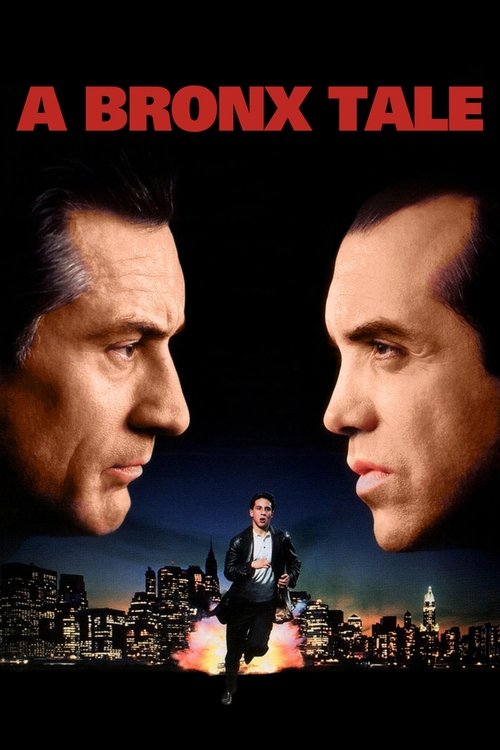
“A Bronx Tale” Review: The Most Underrated Gangster Movie Isn’t Really About Gangsters
Some gangster movies try to wow you with violence, betrayals, and body counts. A Bronx Tale does something smarter: it makes you care about why people choose the life in the first place.
Some gangster movies try to wow you with violence, betrayals, and body counts. A Bronx Tale does something smarter: it makes you care about why people choose the life in the first place—and what it costs them long before anyone pulls a trigger. That’s why it’s one of the most underrated gangster films ever made. Not because it’s flashier than the classics, but because it’s quieter, more human, and (honestly) more truthful.
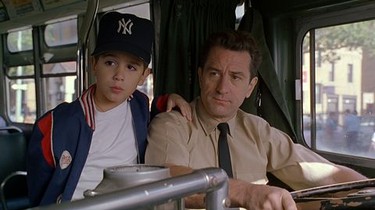
Set in the Bronx during the 1960s, the story follows Calogero, a kid caught between two powerful influences: Sonny, the neighborhood mob boss with charisma and real-world power, and Lorenzo, his hardworking bus-driver father who believes dignity matters more than fear. That push-and-pull is the engine of the movie. It’s not “crime vs. law” in a simplistic way. It’s seduction vs. principle. Sonny offers the kind of authority a young boy can feel in his bones—respect on command, protection, a shortcut to manhood. Lorenzo offers something harder: self-respect, patience, and a life built slowly.
What makes the film hit is how it refuses to pretend either side is purely right or wrong. Sonny isn’t a cartoon villain. He’s intelligent, observant, and surprisingly disciplined. He gives advice that’s practical, sometimes even wise, and he genuinely cares about Calogero in a way that feels real—complicated, imperfect, but real. And Lorenzo isn’t naïve; he’s not blind to the neighborhood’s reality. He just understands something Sonny’s world can’t teach: that being feared isn’t the same as being respected, and fast money isn’t the same as a good life.
The reason A Bronx Tale deserves to sit in the same conversation as bigger-name mob films is that it nails the psychology of growing up around crime. It shows how proximity normalizes things. How kids learn rules just by watching. How admiration forms when you see someone command a room and never get told “no.” And it shows the moral math people do every day—choosing safety over honesty, acceptance over integrity, pride over peace.
Robert De Niro’s direction is a big part of why it works. He shoots the neighborhood with warmth and familiarity, not as a gritty crime postcard. The Bronx feels lived-in, social, communal—like a place where everybody knows everybody, where danger sits right next to joy without announcing itself. The performances are dialed-in across the board. Chazz Palminteri as Sonny is the key: controlled, magnetic, and believable as both a threat and a mentor. De Niro plays Lorenzo with a grounded decency that never turns corny. And the movie gives Calogero’s coming-of-age story enough room to breathe, which is rare for films that share DNA with gangster stories.
Then there’s the romance subplot—often the weakest element in movies like this, but here it matters. Calogero’s relationship challenges his loyalty to the neighborhood’s unwritten rules, especially around race and belonging. It’s not just “a love story” dropped in for softness; it’s another test of identity. Are you brave enough to choose what you want, even if it makes you a target? That’s a gangster question, sure—but it’s also just a life question.
So why is it underrated? Because it doesn’t go for the operatic highs people associate with mob classics. It doesn’t chase spectacle. It’s not endlessly quotable in the meme-y way. It doesn’t have the sprawling criminal chessboard or the “rise and fall” montage structure. Instead, it’s about something more intimate: a boy learning what kind of man he wants to be—while two very different men try to shape him.
And that’s the real twist: A Bronx Tale isn’t great because it’s a gangster movie. It’s great because it uses the gangster world as a pressure cooker for character. It’s ultimately a film about fatherhood, temptation, and the quiet heroism of choosing the harder right over the easier wrong. The violence matters, but the values matter more.
That’s what makes it one of the most underrated gangster films of all time: it understands that the most dangerous thing about the life isn’t getting shot—it’s getting convinced you were meant to live that way.