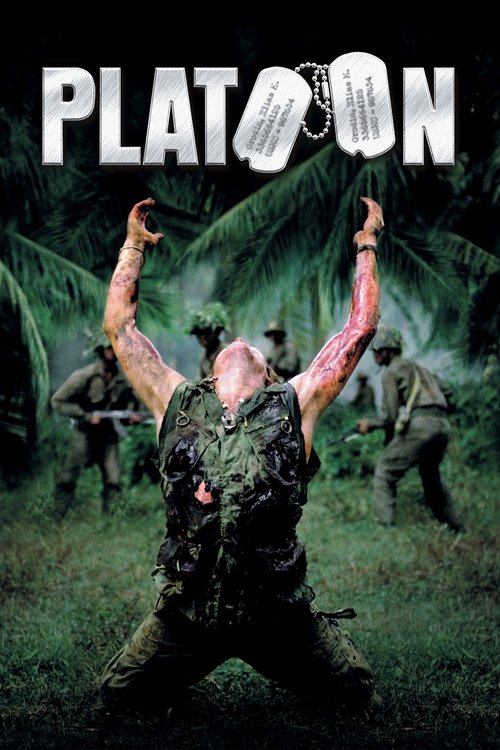
PLATOON Review: A Gritty, Honest Portrait of War’s Brutality
PLATOON is war without the polish: mud, fear, chaos, and moral collapse under pressure. A brutal, honest Vietnam gut-punch that feels lived-in, not staged—and that’s why it still hits.
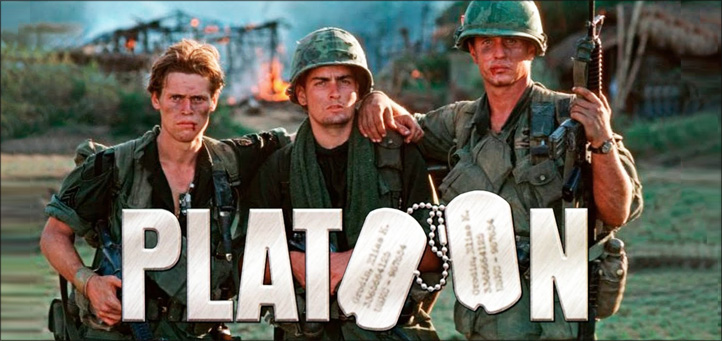
Platoon doesn’t “depict” Vietnam so much as it drags you into it. It’s wet, loud, disorienting, and relentless—less a war adventure than a survival horror film where the monster is exhaustion, fear, and what those things do to your brain. Plenty of war movies show violence. Platoon shows what violence turns people into.
A big reason it lands is that it feels lived-in. Oliver Stone’s direction has the texture of memory: patrols that stretch forever, sudden eruptions of chaos, long stretches of boredom that make soldiers edgy and reckless, and the constant sense that nobody fully understands what’s happening beyond the next patch of jungle. The combat is staged as panic rather than choreography. You don’t get clean hero shots or reassuring geography. You get muzzle flashes, screams, confusion, and that sickening split-second delay between action and consequence.
The film’s grit isn’t just physical; it’s moral. Platoon’s most disturbing idea is that war doesn’t simply reveal character—it erodes it. It grinds men down until decency becomes inconvenient and cruelty becomes efficient. The famous internal conflict within the unit isn’t presented like a neat “good vs. evil” parable; it’s presented as a pressure-cooker reality where leadership, fear, resentment, and adrenaline create factions. Willem Dafoe and Tom Berenger embody two poles of that reality, and the performances are so grounded you stop thinking of them as symbols and start seeing them as types you’d actually meet: the soldier trying to hold onto humanity, and the soldier who’s decided humanity is a liability.
Charlie Sheen’s Chris Taylor is the right kind of audience surrogate—young, idealistic, and quickly overwhelmed. The movie doesn’t treat his naivety as cute. It treats it as dangerous, because it blinds him to how fast the line between “mission” and “mess” disappears. What makes Sheen effective here is how he changes: not through a triumphant arc, but through a gradual hardening. You can watch the war teaching him lessons he didn’t ask for and won’t be able to unlearn.
Platoon is also brutally honest about the “non-combat” violence of war: the way anger spills onto civilians, the way power gets abused, the way a unit’s frustration can turn into collective punishment. These moments are uncomfortable because they aren’t framed as exceptional. They’re framed as what happens when people are scared, armed, and convinced the rules no longer apply. The film refuses to sand that down into something digestible.
And yet, for all its ugliness, Platoon is an excellent movie—not just an important one. It’s controlled chaos. The pacing is tense without being sensational. The sound design and atmosphere do as much storytelling as the dialogue. The jungle becomes a character: a suffocating maze that denies clarity and amplifies paranoia. Stone keeps reminding you that the enemy isn’t always visible, and the bigger danger might be what’s happening inside the platoon.
What ultimately makes Platoon great is that it doesn’t leave you with a comforting takeaway. It leaves you with the aftertaste: trauma, guilt, numbness, the sense that something essential got scraped away. It’s one of the few war films that feels like it’s telling you, directly, that the brutality isn’t a side effect—it’s the environment. You don’t watch Platoon to feel inspired. You watch it to understand why war damages everyone it touches, including the people who survive.