Why The Last Samurai Might Be Tom Cruise’s Best Movie
The Last Samurai might be Tom Cruise’s best: a rare epic where his intensity turns inward—broken, humbled, rebuilt. Stunning craft, big heart, unforgettable final act.
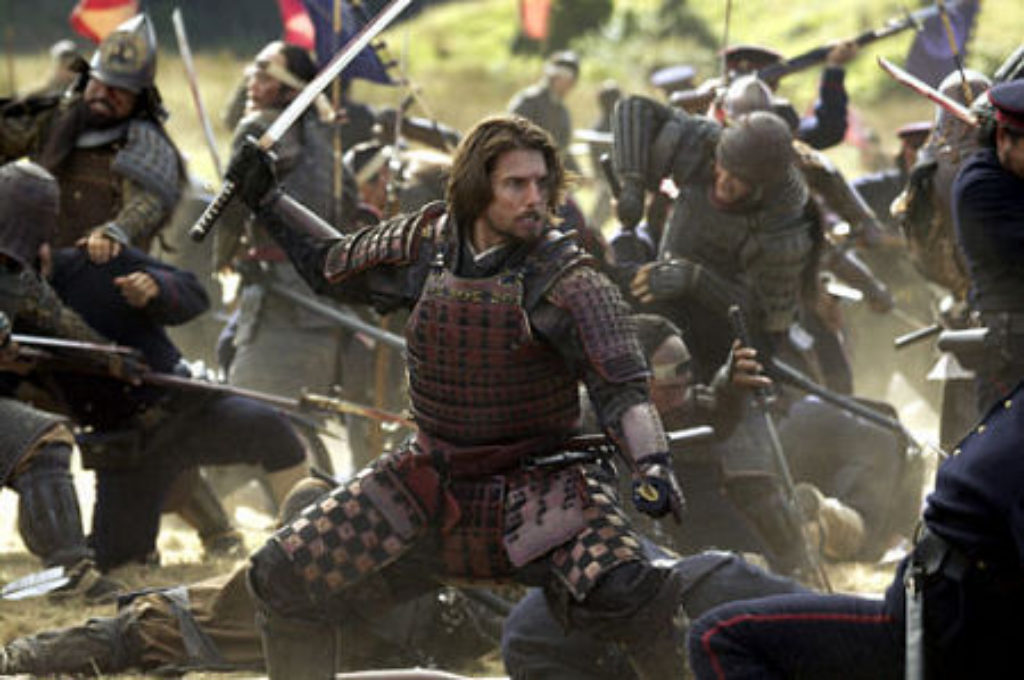
Tom Cruise has a filmography built on extremes: maximalist action, precision-crafted thrillers, and performances engineered like a Swiss watch. He’s been the cocky ace (Top Gun), the slick operator (Jerry Maguire), the ruthless pro (Collateral), the human battering ram (Mission: Impossible), and the guy who can sell you a sentence with a grin (A Few Good Men). So arguing that The Last Samurai is his best isn’t the obvious take—but it might be the one that holds up the most when you step back and ask: which film uses Cruise’s strengths and exposes his vulnerabilities in the most meaningful way?
Because The Last Samurai isn’t just a great “Tom Cruise movie.” It’s a movie where Cruise is the vehicle, not the destination—and that’s exactly why it works.
It gives Cruise something he rarely gets: stillness
Cruise is famous for forward momentum. Even in dramas, he tends to push—verbally, physically, emotionally. The Last Samurai forces him to stop moving. Captain Nathan Algren is a broken man, not a charismatic hero in control. When we meet him, he’s haunted by war, drowning in alcohol, and working as a hired pitchman for a rifle company. He isn’t “cool.” He’s numb. The film asks Cruise to play damage—not as a quick backstory, but as a lingering condition.
And Cruise nails the hardest kind of performance: one where the actor has to decrease rather than increase. Algren’s transformation isn’t a makeover; it’s a slow thaw. His face does a lot of the acting. The movie lets shame, grief, and self-loathing sit in silence long enough for the audience to feel it. That’s not the usual Cruise lane, and it’s one reason the film sticks.
The movie is gorgeously built, and it earns its emotion
Edward Zwick directs with a classic epic sensibility—wide landscapes, tactile production design, and action that communicates story rather than just choreography. Every part of the film feels crafted: the armor, the village life, the contrast between the modernizing government and the old guard, the seasonal shifts. It’s not just pretty; it’s purposeful. The environment becomes part of the narrative—Algren is literally absorbed into a world with different rhythms.
And then there’s the score. Hans Zimmer’s music is one of his most emotionally effective, not because it’s subtle (it isn’t), but because it’s sincere. It commits. It helps the film hit that rare sweet spot where you feel swept up without feeling manipulated.
It’s an epic with a surprisingly intimate core
At a plot level, The Last Samurai is big: modernization, political maneuvering, culture in conflict, warfare. But the emotional engine is intimate: a man trying to figure out if he can live with himself.
The scenes that matter most aren’t battles—they’re the in-between moments:
Algren learning the discipline of a different life.
The quiet respect that forms between captor and captive.
The way the village treats him with caution, then tolerance, then a kind of acceptance he hasn’t earned but desperately needs.
Ken Watanabe’s Katsumoto is essential here. He’s not written as a prop; he’s written as a person with gravity. Watanabe brings warmth, humor, and conviction—he makes Katsumoto the kind of character you understand why people would follow. More importantly, he gives Cruise someone to play against who doesn’t bend to Cruise’s charisma. Katsumoto isn’t dazzled; he’s curious. That dynamic keeps the movie honest.
It’s one of Cruise’s most “complete” performances
Cruise is great when he’s weaponized—when the role aligns with his intensity and competence. But The Last Samurai demands multiple modes at once:
Physical commitment: the training, the fighting, the exhaustion—you believe he’s being remade through effort.
Psychological vulnerability: trauma is not a footnote here; it’s the character’s starting point.
Moral conflict: the film doesn’t let him be purely noble. Algren begins as complicit, paid, cynical.
Earned transformation: by the end, he’s not a superhero; he’s a man who found purpose by surrendering ego.
It’s one of the few Cruise films where you can say: he’s not just “great at being Tom Cruise.” He’s great at being this particular human being.
The action is meaningful, not just impressive
Yes, the battle sequences are huge and expertly staged. But they aren’t just spectacle. They’re emotionally legible. You understand who is where, what’s at stake, and why it hurts. The final battle hits because the film has spent time building admiration, friendship, and tragedy—not because the choreography is cool (though it is).
Cruise’s action star energy is actually used as contrast: you watch an expert soldier learn that mastery isn’t just skill—it’s discipline, restraint, and code. That’s a more interesting use of Cruise’s brand than “watch him win.”
The big caveat: the “white savior” conversation
Any honest review has to acknowledge this: The Last Samurai has long been criticized for centering a Western character in a story rooted in Japanese history and identity. Even if the film tries to frame Algren as a witness rather than a conqueror, the camera still follows him, and the emotional arc is still his. Some viewers will never get past that, and that’s fair.
That said, the film is more nuanced than the laziest version of the critique. Katsumoto is not a sidekick; he has agency, intellect, and leadership. The Japanese characters aren’t presented as a monolith. And the film’s admiration for Japanese culture is sincere (even if simplified in places). You can hold both truths: it’s a moving film, and it’s also a Hollywood epic made through a Western lens.
So… is it his best?
If “best” means most iconic, you could argue Top Gun or Mission: Impossible. If it means best pure acting showcase, you might say Magnolia or Born on the Fourth of July. If it means tightest thriller, Collateral is in the conversation.
But if “best” means the most complete, emotionally satisfying blend of:
performance,
craft,
theme,
rewatchability,
and genuine heart…
…then The Last Samurai has a real case.
It captures Cruise at his most disciplined—still intensely watchable, still physically committed, but also unusually open, wounded, and human. It’s epic without being empty, emotional without being flimsy, and romantic about honor while still showing its cost. For a star built on control, it’s one of the rare films where Cruise lets you see what’s underneath the armor.
And that might be the most impressive thing he’s ever done!
