Are Movie Theaters Actually Back? Gen Z May Be Saving the Big Screen
After years of streaming dominance and predictions of the death of theaters, moviegoing is showing real signs of life. The surprise? Gen Z may be one of the biggest reasons why.
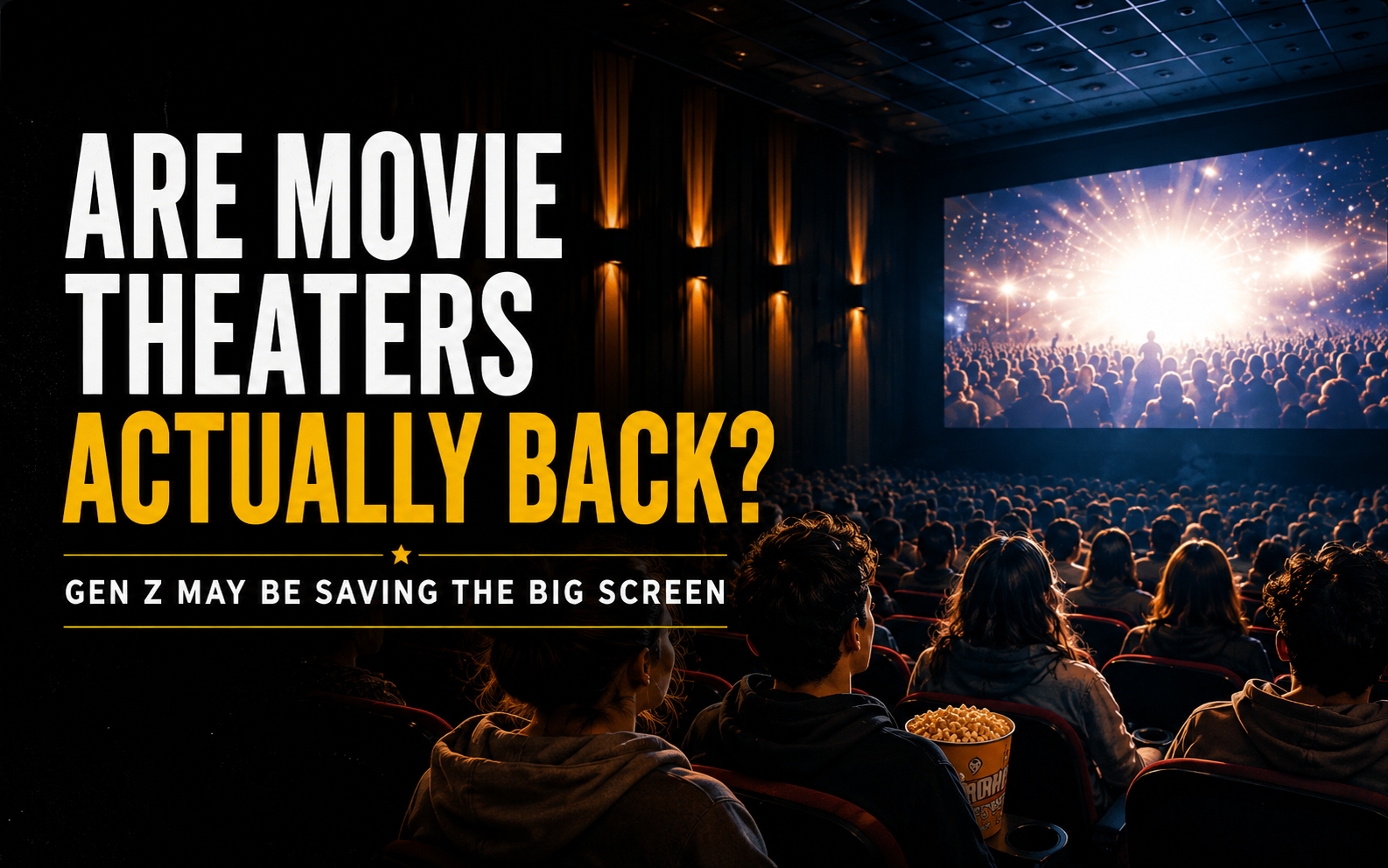
For years, the future of the movie theater looked increasingly bleak.
Streaming gave us thousands of movies without leaving the couch. The pandemic conditioned audiences to watch major releases at home. The gap between theatrical and streaming releases shrank. Ticket prices climbed. And Hollywood increasingly relied on enormous franchise movies to convince people that a trip to the theater was worth it.
It became easy to imagine a future where going to the movies was no longer a regular part of American culture.
Then something interesting happened.
People started coming back.
And one of the generations helping lead them back is the same generation Hollywood had every reason to fear it had lost: Gen Z.
The 2026 Box Office Is Telling a Different Story
Summer 2026 has provided some of the strongest evidence yet that theatrical moviegoing isn't finished.
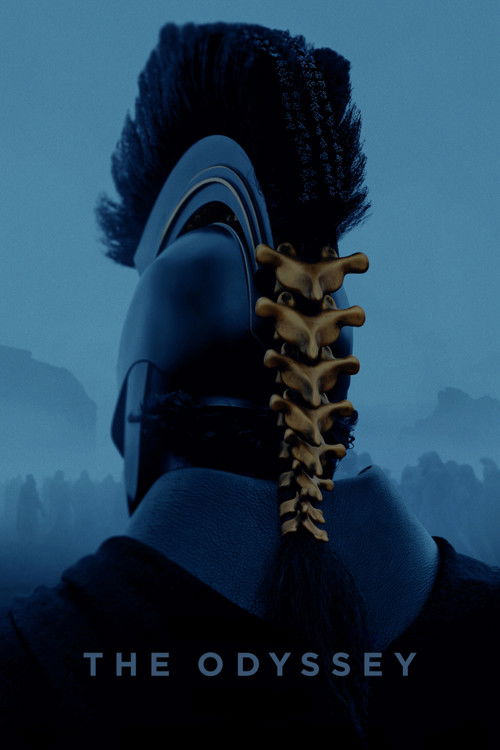
Spider-Man: Brand New Day became a massive theatrical event. Christopher Nolan's The Odyssey turned seeing a movie in IMAX into something closer to getting tickets to a major concert. Toy Story 5 delivered another major family hit.
And it isn't only the giant franchises.
Movies such as Obsession and Backrooms showed that smaller films could generate genuine theatrical excitement, particularly among younger audiences.
The numbers support the change.
According to reporting from the Los Angeles Times, cinemas sold approximately 262 million tickets between May 1 and August 2, 2026 — a 16% increase over the same period in 2025.
By mid-August, the summer domestic box office was running ahead of not only 2025 but the comparable period in pre-pandemic 2019.
That doesn't mean everything is suddenly fixed.
But the conversation around theaters has clearly changed.
A few years ago, the question was whether movie theaters could survive.
Now the more interesting question may be:
What if movie theaters are evolving into something audiences actually value more?
Gen Z Was Supposed to Kill the Movie Theater
Of all the audiences embracing theaters, Gen Z may be the most surprising.
This is the generation that grew up with YouTube, TikTok, Netflix, smartphones and virtually unlimited entertainment available instantly.
If any generation should have considered movie theaters unnecessary, it should have been this one.
Instead, younger audiences are increasingly showing signs that they value the experience.
Ampere Analysis reported that 61% of U.S. internet users ages 18–24 had visited a movie theater during the previous six months, compared with 52% of the overall population.
Industry research cited by the International Union of Cinemas paints an even stronger picture. A Fandango survey found 87% of Gen Z respondents had seen at least one movie theatrically during the previous year, with Gen Z respondents averaging roughly seven theatrical visits.
There are legitimate reasons to be careful with those numbers. Surveys conducted among movie consumers can naturally skew toward people who already like movies, and broader attendance remains below historical levels.
But the direction is difficult to ignore.
Gen Z isn't abandoning theaters.
In some cases, they're becoming their most enthusiastic customers.
Maybe Streaming Accidentally Made Theaters More Special
The irony is that streaming may have helped create the conditions for a theatrical comeback.
When virtually every movie eventually becomes available at home, simply watching a movie is no longer special.
The theater has to offer something else.
Increasingly, it does.
Going to a movie means putting the phone away. Meeting friends. Buying popcorn. Sitting in a dark room with hundreds of strangers and experiencing something simultaneously.
You aren't simply consuming content.
You're doing something.
For a generation whose entertainment and social lives are heavily mediated through screens, that distinction may matter more than Hollywood expected.
Moviegoing has become less about access to a movie and more about access to an experience.
And Hollywood's biggest successes are leaning directly into it.
The "Concertification" of Movies
Look at what happened with The Odyssey.
Christopher Nolan's film didn't simply sell movie tickets. Demand for its limited 70mm IMAX screenings became an event unto itself.
Fans lined up for premium-format tickets. Online ticketing systems struggled with demand. Some screenings sold out far in advance.
The Los Angeles Times reported that enhanced formats—including IMAX, 70mm, premium large format and other specialty presentations—accounted for an estimated 41% of The Odyssey's worldwide box office.
That's remarkable.
People weren't simply asking:
"Do I want to see The Odyssey?"
They were asking:
"Where should I see The Odyssey?"
That's a fundamentally different consumer behavior.
And it points toward what may be the future of theatrical exhibition.
Bigger Screens Are Becoming a Bigger Business
IMAX, Dolby Cinema, 70mm, 4DX and other premium formats aren't side attractions anymore.
They're increasingly part of the reason audiences leave home.
Premium large-format screens represented about 11.9% of the summer 2026 box office, according to Rentrak data reported by the Los Angeles Times, up from 6.6% during the comparable period in 2019.
Spider-Man: Brand New Day also delivered Dolby Cinema its highest-grossing domestic weekend ever.
Audiences have spent years upgrading their home theaters. Large televisions are relatively inexpensive. Streaming quality is excellent. Soundbars are everywhere.
The industry's response appears increasingly obvious:
Don't try to compete with someone's living room. Give them something their living room can't reproduce.
A 70mm IMAX presentation of The Odyssey can do that.
So can hundreds of people reacting together during Spider-Man.
That's the advantage theaters still have.
But Blockbusters Aren't the Whole Story
The most encouraging part of the current theatrical resurgence may actually be happening outside the traditional blockbuster.
Horror has become particularly important.
Obsession and Backrooms became surprise theatrical successes in 2026, with both films having strong connections to creators and audiences that originally developed online.
Backrooms, directed by YouTube creator Kane Parsons, became a particularly striking example of the internet-to-theater pipeline.
That's important because it challenges one of Hollywood's most dangerous assumptions:
That young audiences will only leave home for enormous franchises.
Maybe they won't.
Maybe they'll leave home for something that feels culturally relevant to them.
There's a difference.
Social Media Isn't Necessarily the Enemy
For years Hollywood treated YouTube, TikTok and social media as competition for people's attention.
They are.
But they can also create theatrical audiences.
A generation can discover a filmmaker on YouTube, discuss a trailer on TikTok, log a movie on Letterboxd, debate it on Reddit and then meet friends to see the movie in a theater.
Digital culture and theatrical culture don't necessarily cancel each other out.
Increasingly, they feed each other.
That's potentially a major shift in how Hollywood discovers both audiences and talent.
Instead of the internet replacing movies, the internet can create communities that eventually want to experience those movies together.
There's Still a Big Problem: People Are More Selective
Before declaring the movie theater completely "back," there's an important reality check.
People still don't go to theaters as casually as they once did.
Research cited by Harvard earlier this year found frequent theatrical moviegoing remains significantly below 2019 levels. Other data shows younger adults still attend fewer movies annually than comparable age groups did decades ago.
Streaming isn't disappearing.
Neither are expensive tickets, expensive concessions, frustrating theater etiquette or the convenience of watching a movie from home.
So this isn't necessarily a return to the old model.
And that may be the point.
Theaters don't need to return to 1999.
They need to figure out what moviegoing looks like in 2026 and beyond.
The Theater Is Becoming an Event Again
For decades, seeing a movie was routine.
You looked at what was playing Friday night, picked something and went.
Streaming took over much of that casual behavior.
Today, theaters appear increasingly suited to something different:
Event viewing.
That event can be a giant Christopher Nolan movie projected on 70mm film.
It can be opening night of Spider-Man with a packed audience.
It can be a horror movie everyone discovered online.
It can be an anniversary screening of a movie someone was too young to experience theatrically the first time.
It can even be a smaller film whose audience turns it into a cultural moment.
The movie itself matters.
But increasingly, the experience around the movie matters too.
So, Are Movie Theaters Actually Back?
Yes.
But probably not in the way they existed before.
The days when audiences automatically went to theaters several times a month simply because that's where new movies were available may never fully return.
The new theatrical model is more selective, more premium, more social and more event-driven.
And surprisingly, Gen Z seems perfectly comfortable with that.
Maybe that shouldn't be surprising.
The generation with more entertainment available to them than any generation in history doesn't need another place to consume content.
They need a reason to show up.
When Hollywood gives them one, they're proving that they will.
And that might be the most encouraging sign for the future of the big screen we've seen in years.
So here's the real question: What's the last movie you watched that made you think, "I'm glad I saw that in a theater"?
Related Titles


Related Articles
Marty Supreme Review: Good Acting, Big Swings, and a Lot Less Meaning Than the Hype Promised
Marty Supreme has strong acting and bold style, but too many pointless storylines, overcooked drama, and a flat ending. Maybe the hype was too high—but it never fully earns the noise anyway.
Apr 7, 2026
SINNERS: A Great Movie That Got Crushed by “Masterpiece” Expectations
SINNERS is a bold, bloody Southern Gothic swing that mostly lands—killer score, gorgeous craft, and real bite—but the pacing and rushed finale keep it from masterpiece status and the hype didn’t help.
Feb 23, 2026
Weekend Box Office Recap: Resident Evil Reboots the Franchise With a Monster $60M Opening
Resident Evil topped the box office with a franchise-best $60M domestic debut and $108.3M worldwide, giving horror another major 2026 win as late-summer holdovers cooled.
Sep 21, 2026