Weekend Box Office Recap: Street Fighter Wins No. 1, but You Can See Everything Steals the Show
Street Fighter wins with $31M domestic, but Elizabeth Holmes documentary You Can See Everything steals the spotlight with a stunning $15M debut. Horror cools as the fall box office gains momentum again.

The weekend of October 16–18, 2026 delivered an unexpected box office showdown. A familiar video game franchise returned to theaters, a nearly three-hour documentary became a genuine cultural event, and several expensive studio releases struggled to connect with audiences.
Paramount's Street Fighter opened at No. 1 with an estimated $31 million domestic weekend from 3,575 theaters. The action adaptation added another $20.1 million internationally, giving it a $51.1 million worldwide debut.
But the weekend's most fascinating story was not the movie at No. 1.
A24's You Can See Everything, a documentary about disgraced Theranos founder Elizabeth Holmes, stunned the industry with $15 million from just 855 theaters. Directed by Nathan Fielder and Lance Oppenheim, the film delivered one of the biggest documentary openings in decades and became an unlikely must-see theatrical event.
Meanwhile, Other Mommy suffered a steep second-weekend decline, Whalefall struggled despite an ambitious premise, and the new adaptation of Sense and Sensibility found an enthusiastic young female audience.
For a mid-October weekend, the marketplace was surprisingly diverse. More importantly, it offered another reminder that audiences are increasingly responding to movies that feel distinctive, culturally relevant, and worth discussing.
Street Fighter Wins the Weekend With a $31 Million Opening
The biggest traditional box office story was Street Fighter.
Paramount's adaptation of the legendary Capcom fighting game franchise opened with $31 million domestically, taking the top spot and delivering a respectable launch for a video game property with decades of brand recognition.
The film features an ensemble cast that includes Andrew Koji, Noah Centineo, Callina Liang, Jason Momoa, and Curtis "50 Cent" Jackson. The movie leans into the franchise's recognizable characters, elaborate fights, and exaggerated martial arts mythology.
With a reported production budget of approximately $82 million, the opening is encouraging but not enough to declare the film a financial success.
The domestic audience was 69% male, suggesting the film relied heavily on its established gaming and action fanbase. The international opening added another $20.1 million, but the worldwide start of $51.1 million leaves Paramount needing steady holds over the coming weeks.
The performance also highlights the complicated state of video game adaptations.
After years of Hollywood struggling to translate gaming properties to the big screen, successful franchises like The Super Mario Bros. Movie have demonstrated enormous commercial potential. But not every recognizable gaming brand has the same audience reach.
Street Fighter has worldwide awareness, yet its appeal is different from family-friendly properties like Mario. It targets an older, more action-oriented audience, making strong word-of-mouth especially important.
For now, Paramount has a No. 1 opening. Whether that translates into a successful new film franchise remains to be seen.
Domestic Top 10
Here is the estimated domestic top 10 for October 16–18, 2026, according to AP/Rentrak and Comscore:
- Street Fighter - $31.0 million
- You Can See Everything - $15.0 million
- Other Mommy - $8.4 million
- Whalefall - $8.0 million
- Sense and Sensibility - $7.3 million
- Verity - $6.2 million
- Resident Evil - $5.5 million
- Heart of the Beast - $4.8 million
- Jailer 2 - $3.2 million
- Forgotten Island - $2.3 million
You Can See Everything Becomes the Weekend's Biggest Surprise
The most remarkable story of the weekend belongs to You Can See Everything.
The A24 documentary opened to $15 million from just 855 theaters, an extraordinary result for a nonfiction film running nearly three hours.
Its approximately $17,544 per-theater average was almost double that of Street Fighter, despite playing on fewer than a quarter as many screens.
According to A24, the film generated more than 2,000 sold-out screenings during its opening weekend.
That made it the biggest opening for a film playing in fewer than 1,000 theaters since Borat in 2006. It also delivered the biggest opening for a non-music documentary since Fahrenheit 9/11 in 2004.
Those are remarkable comparisons for a movie that, on paper, sounds like a difficult theatrical sell.
The film follows Elizabeth Holmes, the former Theranos CEO convicted of fraud, during her final days before reporting to federal prison. Nathan Fielder and Lance Oppenheim spent three years making the project in secrecy, with Fielder gaining unusual access to Holmes and her family.
But this is not a conventional documentary.
Fielder's unusual comedic style and the film's provocative approach to its subject have made it a genuine conversation piece. The result is something that audiences appear eager to experience before the details become common knowledge online.
The reviews have been extraordinary, with a reported 99% Rotten Tomatoes critics score and a 99 Metacritic score.
Audience response has been equally impressive. PostTrak reported a 91% definite-recommend score, suggesting unusually strong word-of-mouth potential.
Perhaps the most important statistic is the audience demographic: more than 70% of ticket buyers were under 35.
That is a huge achievement for a documentary and another indication that younger audiences are not abandoning movie theaters. They are responding to movies that feel like cultural events.
Nathan Fielder Proves Internet Culture Can Drive Theatrical Success
The success of You Can See Everything fits one of the defining entertainment trends of 2026.
Earlier this year, Backrooms and Obsession demonstrated that internet-driven filmmaking and online communities could generate enormous theatrical demand.
Now Nathan Fielder has delivered a similar result in an entirely different genre.
Fielder's audience was built through projects like Nathan for You and The Rehearsal, both of which developed devoted online followings. His name has become associated with uncomfortable comedy, unconventional storytelling, and the increasingly blurred line between documentary and performance.
That reputation appears to have translated directly into ticket sales.
There is also a compelling financial story.
You Can See Everything reportedly cost less than $7 million to produce, with marketing expenses below $10 million. A $15 million opening does not automatically mean the movie is profitable, since theaters retain a portion of ticket sales, but it gives A24 an unusually strong foundation.
More importantly, the film's success creates opportunities for expansion.
A documentary does not normally produce this kind of opening-weekend demand. If word-of-mouth holds, You Can See Everything could become one of the most commercially significant documentary releases in recent memory.
Other Mommy Suffers a Brutal Second-Weekend Drop
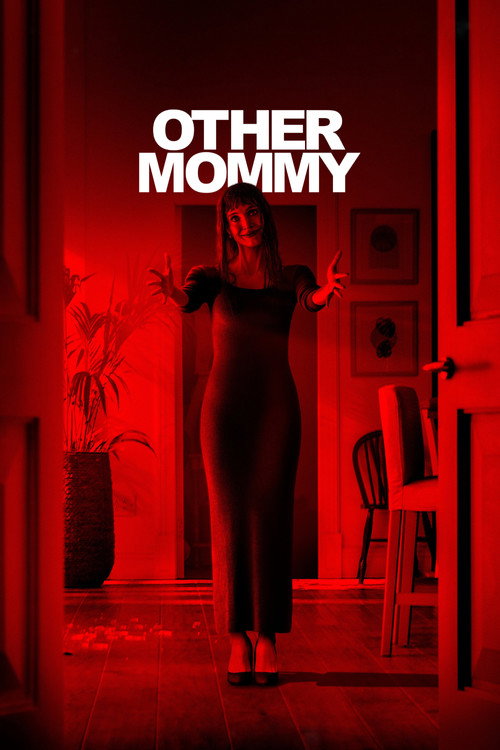
After opening at No. 1 last weekend, Other Mommy fell to third place with approximately $8.4 million domestic.
That represents a steep 70% decline, bringing the horror film's domestic total to roughly $44.9 million after 10 days.
The drop is significant, but it is not entirely surprising.
Horror movies frequently experience sharp second-weekend declines, particularly when opening-weekend audiences are motivated by genre enthusiasm rather than exceptional word-of-mouth.
Other Mommy benefited from strong October timing, Blumhouse's recognizable horror branding, and Jessica Chastain's star power.
However, the poor critical reception and arrival of several new releases appear to have limited its staying power.
Financially, the situation is less concerning than the percentage drop suggests.
With a reported production budget around $18 million, the film has already built a substantial worldwide theatrical total relative to its cost. Marketing and distribution expenses still matter, but the movie does not need blockbuster numbers to justify its existence.
The bigger takeaway is that horror's remarkable 2026 run remains intact, even if individual titles continue to be front-loaded.
Whalefall Struggles Despite a Massive Premise
One of the weekend's bigger disappointments was Whalefall.
The 20th Century Studios survival thriller opened in fourth place with $8 million domestic from 3,065 theaters.
International markets added another $9.5 million, bringing its worldwide debut to approximately $17.5 million.
The film stars Austin Abrams and Josh Brolin and features an unusual survival premise involving a young diver trapped inside a whale.
It is exactly the kind of high-concept concept that can sometimes generate theatrical curiosity.
Unfortunately, that curiosity did not translate into a major opening.
The movie reportedly cost approximately $60 million to produce, making its $17.5 million global start concerning.
The timing may have worked against it.
Street Fighter attracted action audiences, You Can See Everything became the cultural conversation, and Other Mommy continued competing for viewers seeking tense genre entertainment.
That left Whalefall without a particularly clear audience advantage.
The film reportedly earned better reviews than Street Fighter, but the opening demonstrates a familiar lesson: critical approval does not automatically create ticket sales.
For Disney and 20th Century Studios, this is another reminder that expensive original thrillers require extremely precise positioning.
Sense and Sensibility Finds a Young Female Audience
Focus Features' new adaptation of Jane Austen's Sense and Sensibility opened in fifth place with approximately $7.3 million domestically.
That is a modest number compared with the weekend's larger releases, but the audience demographics tell a more interesting story.
The film, starring Daisy Edgar-Jones, attracted an audience that was 84% female, with 58% between the ages of 14 and 18.
That is a striking result for a period romance based on a novel published more than 200 years ago.
The movie also earned an A- CinemaScore, the strongest reported CinemaScore among the weekend's major new releases.
Those figures suggest Focus Features successfully reached a younger audience that may not traditionally be associated with literary period dramas.
The result also reinforces the importance of smart audience targeting.
A Jane Austen adaptation does not need to compete directly with Street Fighter or Resident Evil. Its audience is different, and the film's marketing appears to have understood that.
With positive word-of-mouth and a relatively underserved demographic, Sense and Sensibility could develop into a respectable fall performer.
Verity Continues Its Run
Amazon MGM's Verity finished sixth with approximately $6.2 million, bringing its domestic total to about $66.1 million.
The Colleen Hoover adaptation has now spent three weekends in theaters, and while its initial momentum has cooled, the movie remains an important adult-skewing success story.
After opening to $32.6 million earlier this month, Verity demonstrated the commercial value of bestselling fiction and recognizable authors.
Its audience was heavily female, and the film benefited from a fanbase that arrived with substantial awareness of the source material.
The weekend also continued a larger industry pattern.
Movies with clearly defined audiences often outperform broader studio releases that struggle to explain why audiences should see them in theaters.
Verity did not need to appeal to everyone. It needed to connect with readers, thriller fans, and audiences drawn to its cast.
That strategy continues to deliver meaningful results.
Resident Evil Keeps Adding to a Strong Horror Year
Resident Evil earned approximately $5.5 million domestic in its fifth weekend, bringing its North American total to about $148.5 million.
The reboot's domestic run is beginning to slow, but its international performance remains substantial.
Globally, Resident Evil has become one of the year's most successful horror releases, passing $360 million worldwide.
That is an impressive achievement for a franchise that needed a creative reset.
Director Zach Cregger's involvement appears to have helped reposition the series for modern horror audiences, while the recognizable video game brand provided significant international awareness.
The result also adds to an extraordinary year for horror.
From Obsession and Backrooms to Insidious, Other Mommy, and Resident Evil, the genre has demonstrated an unusual combination of audience demand, manageable costs, and global appeal.
Not every release has shown strong legs, but the overall category remains one of Hollywood's most dependable theatrical investments.
Heart of the Beast Holds Steady
Brad Pitt's Heart of the Beast finished eighth with approximately $4.8 million.
The survival thriller has now reached about $58.3 million domestically after four weekends.
The movie has not become the breakout Paramount might have hoped for, especially considering its reported production budget, but it has demonstrated steadier performance than some of the fall's more expensive adult releases.
Its challenge remains financial scale.
A movie can earn respectable box office numbers and still struggle to recover its costs when production and marketing expenses are substantial.
The difference between a commercially successful adult thriller and an expensive underperformer often comes down to budget discipline.
Heart of the Beast has found an audience. Whether that audience is large enough to make the economics work is another question.
Jailer 2 Delivers a Strong International-Film Result
The Tamil-language action sequel Jailer 2 finished ninth domestically with approximately $3.2 million.
That is a meaningful performance for an Indian-language release in North America.
The film also performed strongly across international markets, demonstrating how large global fan communities can create substantial box office results without relying on traditional Hollywood marketing.
Indian cinema has become an increasingly important part of the North American theatrical marketplace.
Major releases regularly generate strong per-theater results through targeted distribution, dedicated fanbases, and coordinated opening-weekend attendance.
Jailer 2 is another example of that audience power.
Forgotten Island Rounds Out the Top 10
DreamWorks' Forgotten Island finished tenth with approximately $2.3 million.
The original animated film has now reached about $35.1 million domestically.
That is not a major result for a DreamWorks theatrical release, but the film has held reasonably well after its disappointing opening.
The bigger challenge remains original animation.
Families have repeatedly shown that they will support animated theatrical events, but familiar properties like Toy Story, Minions, and PAW Patrol have a significant awareness advantage.
New animated properties need to work harder to persuade parents and children that the theatrical experience is worth the trip.
Forgotten Island appears to have benefited from positive audience response, but that has not translated into a major commercial breakout.
Specialty Releases Make News
The weekend also produced several interesting stories outside the domestic top 10.
Warner Bros.' specialty label released a restored version of Ken Russell's controversial 1971 film The Devils, earning approximately $1.6 million from 350 locations.
That is a notable performance for a decades-old film with a complicated history.
Alex Gibney's documentary Musk expanded to 472 theaters but earned only about $307,000 over the weekend. The distributor reported difficulties advertising the film on major social platforms, including X and TikTok.
Netflix also made an unusual move by publicly reporting theatrical grosses for La Bola Negra.
The Spanish-language film earned approximately $277,500 from four theaters, with Netflix planning a 47-day theatrical window before its streaming debut.
That is notable because Netflix has historically been reluctant to disclose theatrical performance.
The decision may reflect a broader recognition that theatrical visibility can help films generate cultural attention and awards momentum.
The Bigger Story: The Box Office Is Becoming More Audience-Driven
The defining story of this weekend was not simply that Street Fighter won.
It was that an unconventional Elizabeth Holmes documentary became one of the biggest theatrical talking points of the fall.
The contrast is revealing.
Street Fighter had familiar intellectual property, a recognizable gaming franchise, major action sequences, and thousands of screens.
You Can See Everything had a nearly three-hour runtime, an unusual filmmaker, a controversial subject, and fewer than 900 theaters.
Yet the documentary generated extraordinary demand and a much higher per-theater average.
That is not an argument against franchise movies. Street Fighter still won the weekend, and familiar brands remain commercially valuable.
But it shows that the theatrical marketplace is increasingly rewarding distinct experiences.
The lesson from 2026 keeps repeating itself.
Audiences supported Backrooms because it felt connected to internet culture. They supported Obsession because it became a word-of-mouth phenomenon. They supported The Odyssey because Christopher Nolan turned a mythological epic into a premium-format event.
Now they are supporting You Can See Everything because it feels culturally urgent, surprising, and impossible to replicate through a standard streaming release.
According to Rentrak, the overall weekend generated approximately $101.6 million in domestic ticket sales, up about 45% compared with the same weekend in 2025.
Year-to-date domestic box office has reached about $8.2 billion, nearly 20% ahead of the same point last year.
That is encouraging heading into the final months of 2026.
With major releases still scheduled for the holiday season, the industry has a meaningful opportunity to finish the year strongly.
International Box Office
Internationally, Street Fighter was the weekend's leading new global release.
The Paramount action film earned $20.1 million overseas across 66 international markets, giving it a $51.1 million worldwide debut.
Among the reported overseas markets, the United Kingdom contributed approximately $3.3 million, Mexico added $1.8 million, and Australia delivered $1.6 million.
Those figures demonstrate recognizable international demand, although the movie will need stronger holds and broader worldwide momentum to justify its reported $82 million production budget.
One of the biggest worldwide stories was Jailer 2. The Indian sequel earned approximately $31.2 million globally for the weekend, including about $28 million internationally, pushing its cumulative worldwide total to roughly $44.5 million.
Resident Evil continued to be a major international performer, earning approximately $17.1 million overseas during the weekend. Its worldwide total has reached about $361.2 million, including approximately $212.7 million from international markets.
Other Mommy added roughly $9.6 million internationally, bringing its worldwide total to about $78.8 million. Even after its steep domestic second-weekend decline, the film remains in a reasonable commercial position relative to its reported production budget.
Verity earned approximately $11.4 million overseas this weekend, bringing its global total to about $145.3 million. That confirms the Colleen Hoover adaptation has appeal well beyond North America.
Whalefall opened to $9.5 million internationally, for a disappointing $17.5 million worldwide launch. The movie will need substantial improvement over the coming weeks to offset its reported production costs.
Finally, You Can See Everything earned its entire $15 million opening domestically, with no significant international rollout reported yet. That makes its domestic result especially remarkable and leaves potential additional markets available for expansion.
The global box office continues to show the same pattern as North America: familiar franchises remain important, but audience enthusiasm is increasingly unpredictable.
Bottom line: Street Fighter delivered a respectable No. 1 opening, but You Can See Everything was the weekend's real breakout. Its extraordinary documentary debut reinforces one of 2026's clearest box office lessons: audiences will show up for unusual movies when the theatrical experience feels culturally essential.